
The Royal Oak Chronograph has always been a watch that relies on its proportions as much as its mechanical complications. Its angular case, exposed bezel screws and integrated bracelet have remained familiar for years, which makes the latest 38mm version particularly interesting. From a distance, little appears to have changed. Look more closely, however, and the 2026 update reveals a different dial arrangement, a new movement and a caseback that finally allows the mechanics to be seen.For readers following Sports Watches UK and its replica watch coverage, these changes are worth understanding. The Royal Oak is a watch whose identity depends heavily on relatively small design decisions. A slightly misplaced counter, an incorrect case profile or an awkward bracelet connection can alter its appearance considerably. The latest chronograph provides a fresh reference for examining those details.The 38mm case remains central to the appeal of this version. Unlike a conventional round watch, the Royal Oak carries much of its visual weight through its broad bezel and integrated bracelet. The first bracelet links continue the shape of the case rather than hanging from separate lugs. This means that the stated diameter tells only part of the story. The watch can appear wider on the wrist than its measurements suggest, particularly when viewed from above.Audemars Piguet has retained the familiar 38mm diameter and a case thickness of approximately 11.1mm. That is important because the new movement could easily have resulted in a larger or noticeably thicker watch. Instead, the proportions remain close to the earlier generation. The balance between the case, bezel and bracelet continues to define the smaller Royal Oak Chronograph.On the stainless steel version, the combination of brushed surfaces and polished bevels gives the case much of its character. The octagonal bezel catches the light along its edges, while the flatter brushed sections provide contrast. These transitions are particularly important to the appearance of the original watch. Without them, the Royal Oak loses much of the depth that makes its relatively simple shape so recognisable.The blue Grande Tapisserie dial is equally familiar, although the updated chronograph arrangement changes its appearance. The counters have been repositioned, with the hour totaliser at three o’clock and the minute counter at nine. The date window now sits between four and five o’clock. None of these changes is especially dramatic when considered separately, but together they give the dial a different sense of balance.
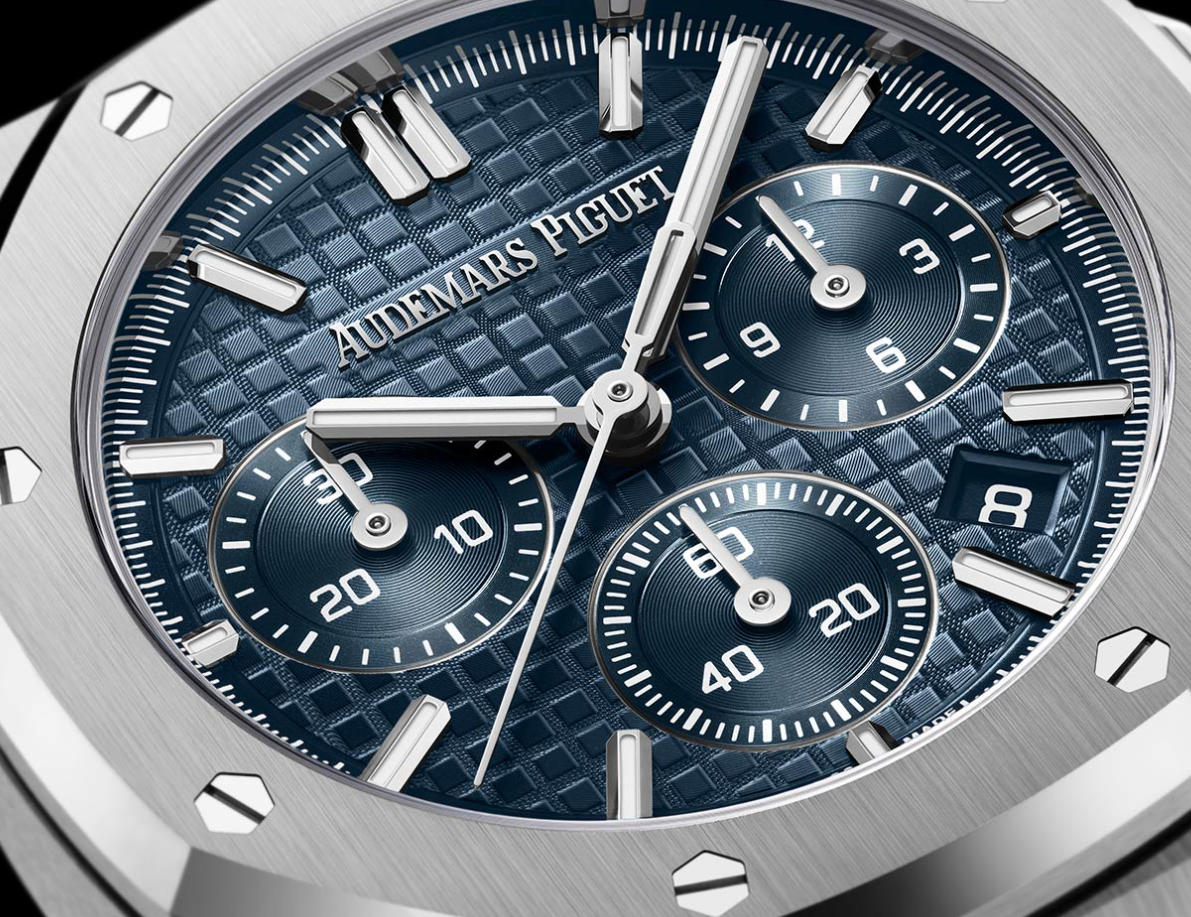
The revised layout also creates an immediate way to distinguish the new reference from older versions. Anyone comparing photographs should pay attention to the position of the counters and date rather than relying on the colour of the dial or the general appearance of the case. These are useful details when studying the 2026 Audemars Piguet Royal Oak Chronograph 38mm alongside its predecessor.
A New Movement Without a Larger Case
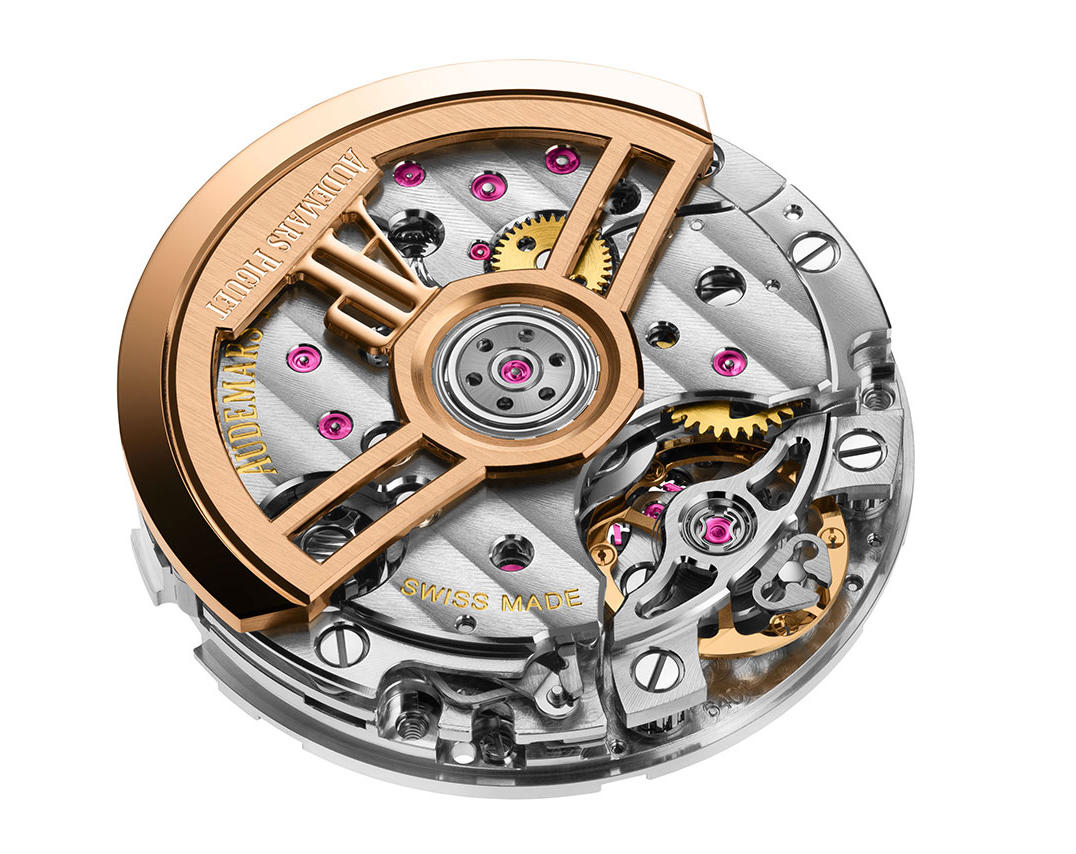
The most substantial development is the arrival of Calibre 6401. The previous 38mm Royal Oak Chronograph relied on Calibre 2385, a movement that had served the collection for many years. The replacement introduces a modern integrated chronograph architecture while preserving the compact dimensions required by the smaller case.The new automatic movement uses a column wheel and vertical clutch, operates at 28,800 vibrations per hour and offers approximately 55 hours of power reserve. That is a noticeable increase over the previous movement’s approximately 40 hours. Although the larger Royal Oak Chronograph uses a flyback movement, Calibre 6401 does not include that function.One welcome consequence of the new construction is the transparent sapphire caseback. The earlier 38mm chronograph had a closed back, leaving its movement hidden. Owners of the latest version can now see the automatic winding rotor and movement finishing. This adds another dimension to a watch whose appeal has traditionally been concentrated on its case, dial and bracelet.The Royal Oak Chronograph Calibre 6401 movement is therefore more than a replacement for an ageing mechanism. It changes the experience of the watch without requiring a substantial alteration to its exterior. The additional power reserve is useful, but the ability to view the movement is arguably the most immediately noticeable difference for someone examining the watch away from the wrist.
The new collection includes a stainless steel model with a blue dial and pink gold versions with different decorative treatments. The basic architecture remains consistent, but the choice of material changes the character of each watch. Steel emphasises the industrial quality of the Royal Oak, while pink gold introduces a warmer appearance and considerably more visual weight.For UK readers interested in replica versions, the new references also raise questions about how faithfully the updated design can be reproduced. A convincing exterior depends on more than copying the octagonal bezel. The position and spacing of the chronograph counters, case thickness, bracelet articulation and transitions between brushed and polished surfaces all contribute to the finished appearance.Movement descriptions deserve particular attention. A replica may imitate the arrangement of the original dial without using a comparable chronograph mechanism. The presence of a transparent caseback does not necessarily indicate that the movement inside resembles Calibre 6401 in construction or operation. Original manufacturer specifications should never be treated as confirmed specifications of a replica watch.There is also a difference between looking accurate in a photograph and feeling convincing in daily use. The Royal Oak’s integrated bracelet is a good example. Its shape continues directly from the case, meaning that the first links affect both the visual proportions and the way the watch sits on the wrist. Poorly finished edges, stiff articulation or an incorrectly shaped clasp can make an otherwise similar-looking watch feel quite different.These are the kinds of details worth examining when comparing Royal Oak Chronograph case and bracelet finishing. Our watch knowledge articles explain how movements, materials and case dimensions influence the appearance and construction of different sports watches.

The new 38mm Royal Oak Chronograph is particularly interesting because Audemars Piguet has resisted the temptation to make an established design noticeably larger or more elaborate. The underlying movement has changed, the dial has been reorganised and the caseback now reveals the mechanics, yet the watch remains immediately recognisable.That continuity is also what makes accurate reference identification important. The earlier 26715 and the newer 26450 may look closely related, but their movements, dial arrangements and casebacks are different. Photographs and specifications from the two generations should not be mixed when discussing a particular model.For anyone studying the differences between Royal Oak Chronograph generations, the latest 38mm release illustrates how much can change within a familiar design. It retains the shape and proportions that established the collection while introducing mechanical improvements that are not immediately apparent from the front. The result is a more substantial update than its restrained appearance initially suggests.