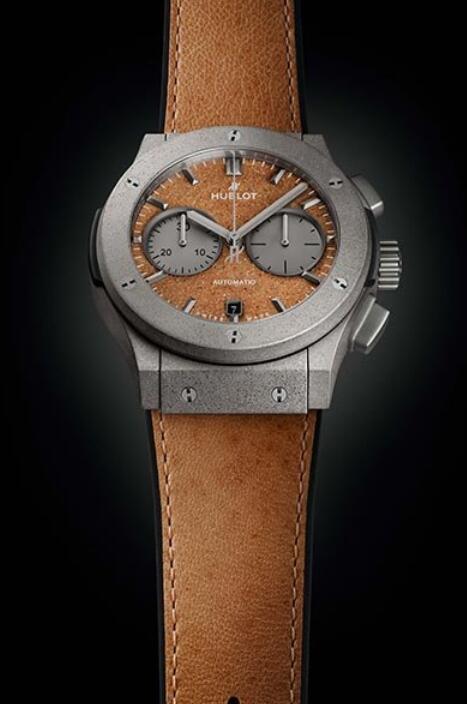
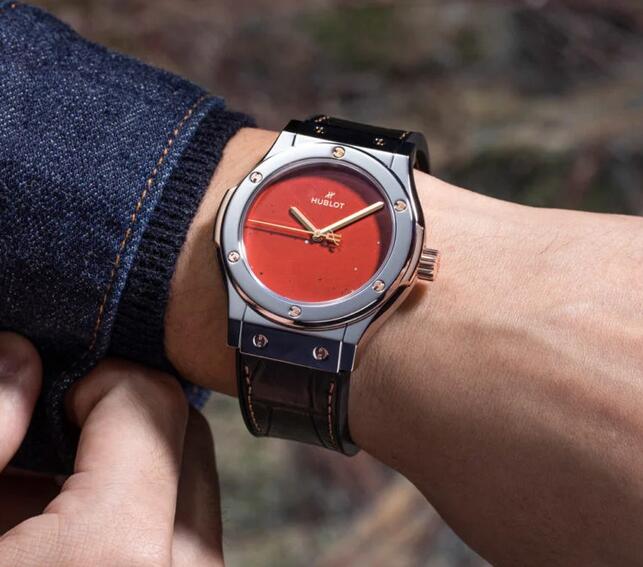
The Hublot Classic Fusion Chronograph Desert Fusion is interesting because its identity comes from materials rather than complication. Created around the UAE’s 50th anniversary and launched during Dubai Watch Week, the original watch combines a 45mm composite-concrete case with a dial containing orange-toned desert sand. For Sports Watches UK, that makes it a useful reference for understanding how a sports watch can communicate place and history without relying on a completely new case shape.
Concrete, sand and the Classic Fusion shape
The Classic Fusion normally looks calmer than the Big Bang. That restraint matters here. Concrete gives the case a rough, architectural surface, while the sand dial introduces a granular texture that would be much less convincing on a busier watch. The camel-coloured leather strap completes the palette without competing with either material.
The original edition was produced with Ahmed Seddiqi & Sons and limited to 100 pieces. The case material was intended to echo the modern architecture of the Emirates, while the sand points back to the landscape surrounding those cities. It is a more coherent design story than simply applying a new colour to an existing model.
What the original reference establishes
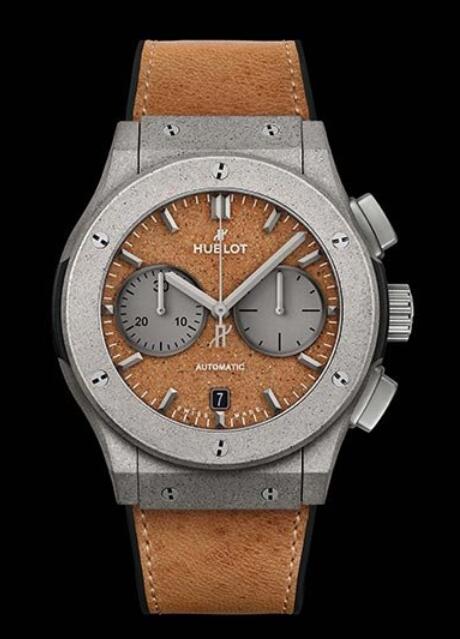
The specifications in this section describe the genuine Hublot reference, not a replica. The source material for the watch identifies the HUB1143 automatic chronograph, an open caseback and a power reserve of about 42 hours. A special anniversary inscription appears on the sapphire crystal. Those details provide a reference point when comparing replica versions, but seller language such as “Swiss”, “AAA” or “1:1” does not prove that a replica uses the same construction or movement.
On a replica, the most revealing comparison is likely to be the material treatment. Concrete should not look like flat grey plastic, the dial texture should have visible depth, and the chronograph layout should remain balanced inside the large case. The transition between case, bezel and strap also matters because the Classic Fusion design has fewer visual elements to hide poor proportions.
Why this model belongs in the Hublot story
The Desert Fusion is less about technical spectacle than the Big Bang family. Its appeal is the way an established Classic Fusion case becomes a container for architecture, landscape and colour. Readers comparing Hublot replicas can use the site’s Hublot coverage to see how the brand handles materials across more aggressive models as well.
That is also why this watch is a useful test of replica quality. The headline feature is not a logo or a complicated display. It is surface character. If the concrete, sand and leather do not feel visually distinct, much of the reference’s reason for existing disappears.